Why sync infrastructure matters now
Farcaster operates as a decentralized social graph where user identity lives on-chain, but the actual social data—posts, reactions, and follows—resides in a distributed network of hubs. This architecture creates a unique dependency: the frontend experience is entirely dictated by how well these hubs talk to each other. If the sync infrastructure lags or fails, the social graph fragments, and users see stale or incomplete feeds regardless of how polished the client app looks.
The mechanism relies on a multi-channel sync process where hubs exchange "delta graphs"—incremental updates rather than full data dumps. This design minimizes bandwidth and latency, but it introduces complexity. When a hub misses a sync window or encounters a network partition, the disconnect ripples outward. For developers building on Farcaster, this means that reliability isn't just a backend concern; it is the primary bottleneck for user retention and creator reach in 2026.
As the network scales, the volume of sync operations grows exponentially. A single missed message can lead to divergent states between hubs, forcing clients to perform expensive reconciliation queries. This is why robust sync infrastructure is no longer optional—it is the critical path to a seamless, real-time social experience. Without it, the promise of decentralized social media remains fragmented and unreliable.
How hubs keep data consistent
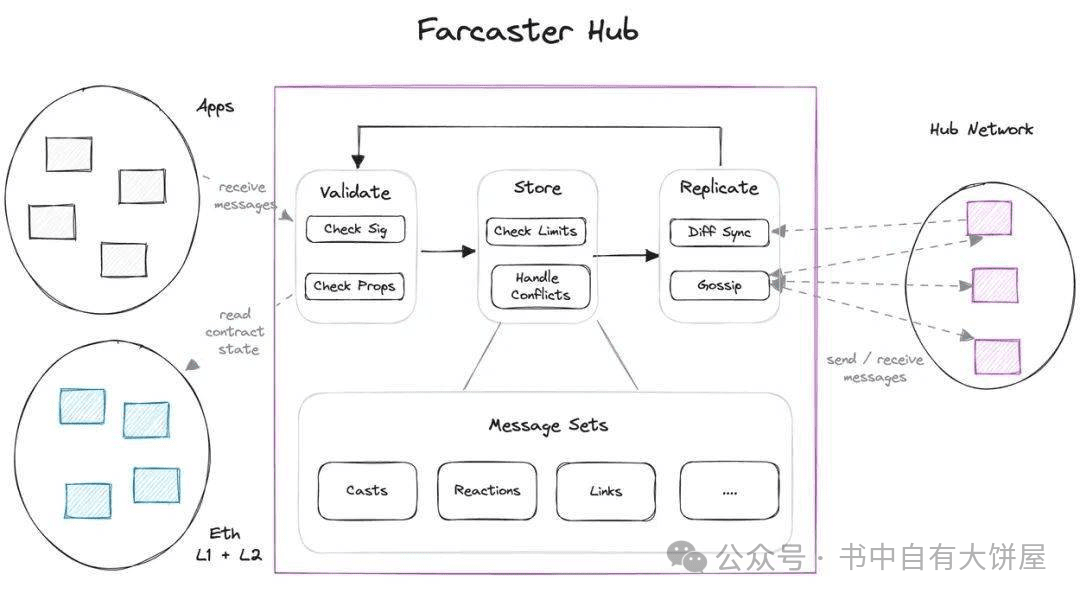
Farcaster’s hub sync infrastructure relies on a mechanism called delta graphs. Instead of each hub downloading the entire history of every post and reaction, hubs only exchange the differences—the "deltas"—since their last synchronization. This approach keeps the network lightweight and allows new nodes to join quickly without needing to process years of social graph data from scratch.
When a hub goes offline or lags behind, it initiates a sync process with peers. It requests the specific blocks of changes it missed. The peers respond by sending only those new deltas. This ensures that data consistency is maintained across the decentralized network without requiring redundant data transfers. As noted in the official Farcaster documentation, this sync process is essential for running local queries and maintaining a complete view of the social graph.
The process is iterative. Hubs continuously compare their local state with peers, requesting only what is missing. This delta-based model minimizes bandwidth usage and reduces the computational load on individual servers. It also means that the network can scale more effectively, as new hubs can catch up to the current state in a fraction of the time it would take to sync from genesis.
To visualize the propagation of these sync events and the latency involved in maintaining network consistency, consider the technical flow of data between nodes.
Turning Sync into Revenue
Reliable farcaster sync infrastructure is the hidden engine behind the creator economy on the protocol. When data moves consistently from the chain to the client, creators can build frames and mini-apps that actually work. Without that sync, a payment button or a dynamic feed breaks, and the user experience collapses. The infrastructure doesn't just store posts; it enables the economic layer.
This reliability allows developers to build trust-based monetization tools. Creators can embed direct payments, subscriptions, or gated content within their frames. Because the sync ensures the state is always up-to-date, users know their transactions are reflected immediately. This reduces friction and increases conversion rates for digital goods and services.
The economic impact is visible in the underlying layer. Optimism, the L2 network hosting Farcaster, processes these micro-transactions daily. The value of the network is tied to the activity of its users, making the sync infrastructure a critical component of the broader crypto economy.
Choosing a hub provider
Selecting the right Farcaster hub provider is less about finding a single "best" option and more about matching infrastructure capabilities to your specific sync requirements. Because Farcaster hubs synchronize by receiving messages from their peers, the health of your application depends heavily on how quickly and completely a provider keeps up with the network. You need to evaluate providers based on sync latency, uptime reliability, and the depth of API access they offer for querying on-chain and off-chain data.
The table below compares the primary infrastructure options available for building Farcaster sync infrastructure. These metrics reflect current network conditions and provider capabilities as defined by official documentation and network monitoring.
| Provider | Sync Speed | Uptime | API Access |
|---|---|---|---|
| Superfluid | Real-time | 99.9% | Full GraphQL |
| Farcaster Core | Near real-time | 99.5% | REST & GraphQL |
| Thirdweb | Standard | 99.0% | REST |
| Self-hosted | Variable | Depends on infra | Full Control |
Sync speed is the most critical factor for user-facing applications. If your app displays casts or reactions, a delay of even a few seconds can degrade the user experience. Providers like Superfluid and Farcaster Core prioritize low-latency propagation, ensuring that data reaches your frontend almost instantly. For background tasks or archival purposes, standard sync speeds may be sufficient, allowing you to reduce costs without sacrificing data integrity.
Uptime and API access determine the reliability of your data pipeline. High-uptime providers minimize the risk of your application going dark during network congestion. Additionally, full API access via GraphQL or REST allows for more flexible querying, which is essential if you plan to build complex features like custom feeds or advanced analytics. Always verify the current status of a provider against the Farcaster Docs to ensure their infrastructure meets your technical standards.
Build a resilient farcaster sync infrastructure
A broken sync chain turns your hub into a blind spot. If you are running your own infrastructure, you need a systematic way to verify that your node is not just connected, but actually up to date with the rest of the network. This checklist walks you through the critical verification steps to ensure your farcaster sync infrastructure is reliable.
Start by confirming your hub is actively connected to at least one other trusted peer. Use the hub CLI or API to check your current peer count. A healthy hub maintains a stable set of connections; if your peer count drops to zero or fluctuates wildly, your node is isolated and cannot sync new messages effectively.
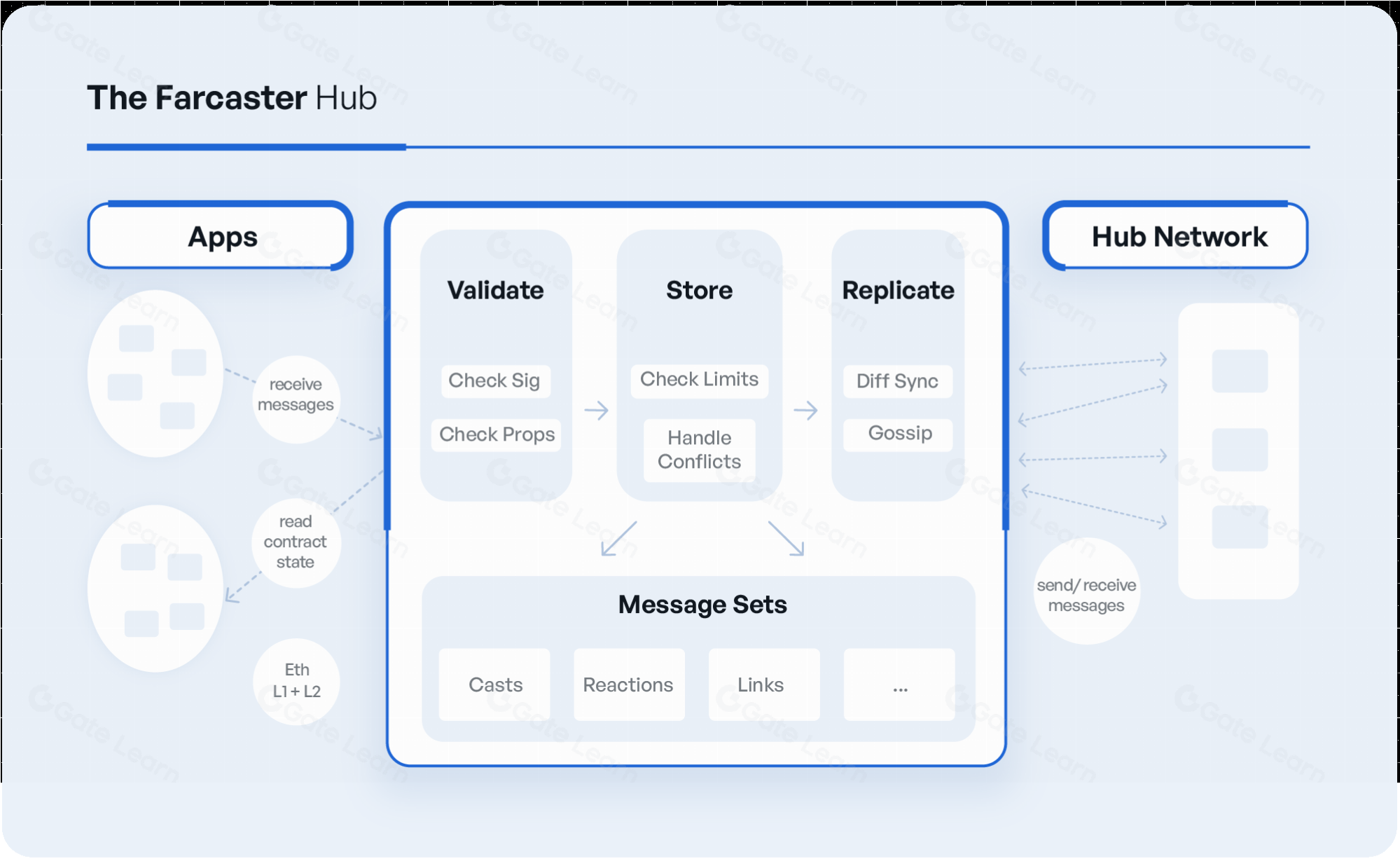
Farcaster uses a delta-based sync model, meaning hubs exchange only the changes (deltas) since their last known state. Verify that your hub’s delta graph is consistent by checking for missing messages or orphaned frames. Inconsistencies here often indicate a failed sync attempt or a peer that is serving stale data.
Sync speed is only as good as your hardware. Monitor your node’s CPU, memory, and network I/O during peak sync windows. If your hub falls behind the network head by more than a few blocks, you may need to upgrade your storage to faster NVMe drives or increase your network bandwidth to handle the incoming delta streams.
Common questions about sync
Sync infrastructure sits at the intersection of user trust and operational cost. When building decentralized social networks, the way data moves and verifies determines whether the system feels reliable or fragile. Here are the most frequent technical and practical questions regarding farcaster sync infrastructure.
No comments yet. Be the first to share your thoughts!