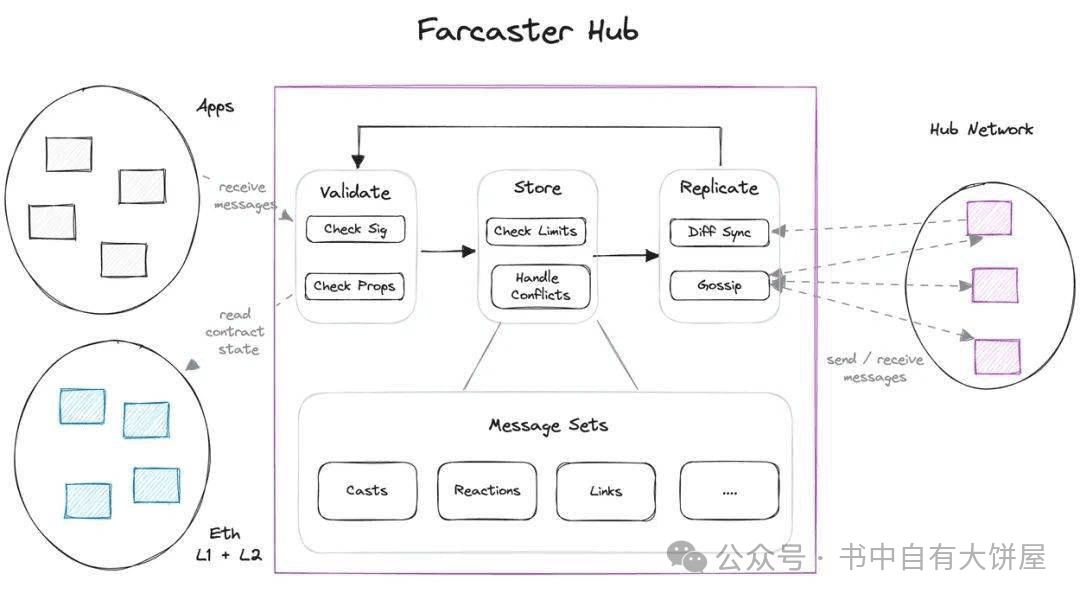
Farcaster Sync Analysis
Understanding the sync mechanism is essential for creators looking to leverage Farcaster for monetization and onchain growth. Farcaster operates as a decentralized social protocol built on Ethereum, where smart contracts manage interactions and data ownership remains with the user rather than a central platform. This architecture allows for programmability and customization that traditional social networks cannot match.
The sync process is the backbone of this network, enabling developers and hubs to stay updated with the latest state of user data. It functions in three distinct phases: snapshot sync, gossip sync, and state sync. Snapshot sync provides a fast initial catch-up to the current state, while gossip sync handles real-time updates across the network. This structure ensures that data is both accessible and verifiable, which is critical for building reliable onchain applications.
For creators, this means that your audience and content are not held hostage by a single entity. You maintain full control over your data, reducing the risk of censorship or data breaches. This ownership model is a significant benefit, allowing you to build trust and loyalty with your community. As you explore monetization strategies, knowing that your data is secure and portable is a foundational advantage.
While Farcaster offers these robust features, it is part of a broader ecosystem of decentralized social platforms. Alternatives like Bluesky and diaspora* also prioritize user control, but Farcaster’s integration with Ethereum provides unique opportunities for onchain interactions and monetization. Understanding these differences helps you choose the right infrastructure for your goals.
Sync Phases and Latency
Farcaster synchronization operates in two main phases: snapshot sync and gossip sync. Snapshot sync provides a fast initial state, bringing a new hub close to current reality. Gossip sync then handles the continuous stream of updates. For creators building real-time applications, understanding this latency is critical.
Hub Architecture and Consistency
Farcaster relies on a decentralized hub network. Hubs sync with each other to maintain eventual consistency. This design means data availability is high, but immediate consistency across all nodes is not guaranteed. Developers must account for this when building features that rely on precise, up-to-the-second user data.
Snapchain and Real-Time Access
For advanced use cases, Snapchain offers a more granular approach. It allows developers to run nodes that provide real-time access to specific data streams. This is ideal for complex analytics or high-frequency trading bots, but it requires significantly more infrastructure resources than standard hub syncing.
Storage and Bandwidth Costs
Syncing the entire Farcaster network to a local machine is resource-intensive. Storage costs scale with network growth, and bandwidth usage can be high during snapshot synchronization. Creators and developers should evaluate whether they need the full history or can rely on curated data sources to reduce overhead.
| Sync Method | Latency | Storage Cost | Consistency |
|---|---|---|---|
| Snapshot Sync | High (Initial) | High | Eventual |
| Gossip Sync | Low | Low | Eventual |
| Snapchain | Real-Time | Very High | Real-Time |
Farcaster sync 2026: common: what to check next
Before committing to the Sync infrastructure or launching a monetization strategy, it helps to understand the underlying mechanics and tradeoffs. Here are the most practical questions creators and developers ask.
Understanding these fundamentals clarifies why Sync is more than just a technical tool—it is the backbone of a creator-owned social economy.
No comments yet. Be the first to share your thoughts!