Farcaster sync limits to account for
Farcaster Sync Analysis works best as a sequence, not a scramble through settings. Do the minimum first: confirm compatibility, connect the core hardware, update only when needed, and test the result before adding optional features. That order keeps the task understandable and makes failures easier to isolate. After each step, pause long enough for the interface to finish syncing. Many setup problems are timing problems disguised as configuration problems. If the same step fails twice, record the exact error, restart the smallest affected piece, and retry before moving deeper.
The simplest way to use this section is to keep the setup small, verify each change, and record the stable configuration before adding optional accessories.
Farcaster sync choices that change the plan
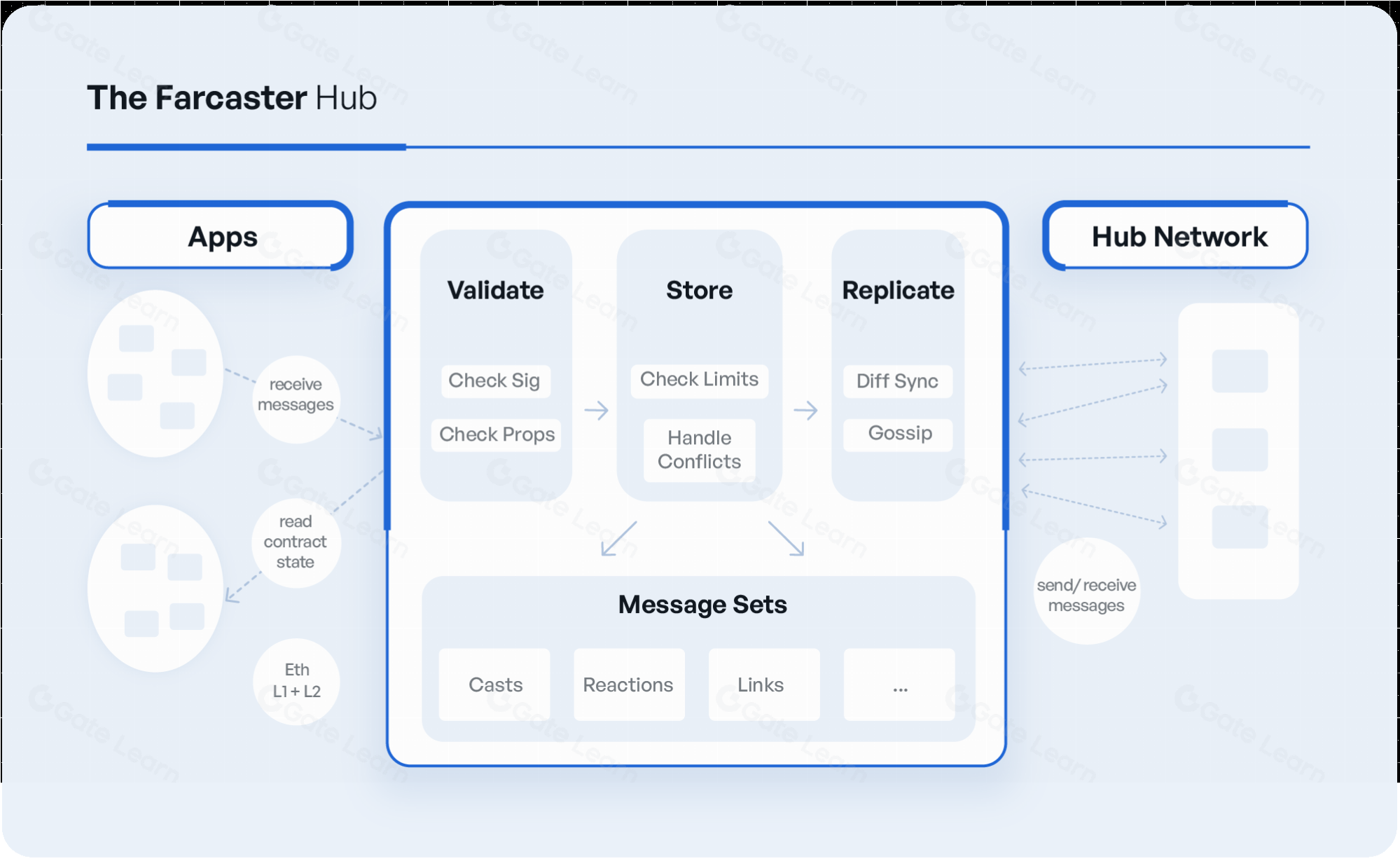
Running a Farcaster hub requires balancing storage costs against data freshness. The protocol relies on a two-phase sync process: gossip for immediate propagation and diff sync for state reconciliation. For creators monetizing content, this infrastructure directly impacts how quickly casts appear across clients and how much data you must store to maintain a valid node.
The core tension lies in choosing between running a full historical archive or a lightweight client. Full nodes consume significant disk space but offer the highest reliability for indexing and monetization tools. Lightweight clients reduce overhead but may lag during network congestion, potentially missing early engagement opportunities.
Sync Latency vs. Storage Cost
Gossip sync ensures your hub sees new casts within seconds, critical for real-time engagement. However, maintaining this speed requires robust bandwidth and memory. Diff sync handles the heavy lifting of verifying state changes, but if your node falls behind, the catch-up process can temporarily stall new data ingestion.
Network Reliability vs. Operational Simplicity
A fully synced hub guarantees you have the complete dataset needed for reliable API responses. This is essential for building monetization features like tip jars or subscription gates. However, keeping a node fully synchronized demands consistent uptime and regular maintenance. A dropped connection can leave your hub with stale data, affecting user experience.
Indexing Depth vs. Query Speed
Deeper indexing allows for complex queries, such as finding all casts from a specific creator within a time window. This depth is necessary for advanced analytics and personalized feeds. Yet, deeper indexes increase database size and query latency. For simple feed rendering, a shallow index may suffice, offering faster response times with less resource consumption.
| Factor | Full Node | Lightweight Client | Impact on Monetization |
|---|---|---|---|
| Storage Requirements | High (TB scale) | Low (GB scale) | High storage increases operational costs, reducing net revenue. |
| Data Freshness | Real-time via gossip | Delayed via diff sync | Real-time data captures early engagement spikes. |
| Indexing Depth | Complete historical index | Limited or recent-only | Deep indexing enables complex creator analytics tools. |
| Operational Overhead | High maintenance | Low maintenance | Lower overhead allows focus on content creation. |
TechnicalChart symbol="NASDAQ:AAPL" chartStyle="candle" interval="1D" indicators='["volume","rsi"]' />
How to Choose the Right Farcaster Sync Infrastructure
Selecting the correct sync layer is the difference between a creator platform that scales and one that stalls. Farcaster’s architecture relies on a two-phase process: gossip for rapid propagation and diff sync for state reconciliation. If your infrastructure cannot handle this load, you risk data inconsistency, which directly impacts user trust and monetization potential.
The decision framework below prioritizes reliability over novelty. Each step focuses on concrete technical capabilities rather than marketing claims. Use this sequence to evaluate providers and build a robust foundation for your creator economy project.
Start by testing the latency of potential hub providers. High-quality sync infrastructure must propagate messages within seconds. Use a public Farcaster client to post a test message and measure the time it takes to appear across different nodes. If propagation exceeds 10-15 seconds, the provider may struggle during peak usage. Prioritize providers with multiple geographically distributed endpoints to ensure consistent speed.
Syncing is only half the battle; storage is the other. Ensure your provider offers redundant data storage across multiple regions. Farcaster data is append-only, meaning once written, it cannot be altered. This immutability requires robust backup strategies. Ask providers about their disaster recovery plans and how they handle data archival. A provider that loses historical data effectively breaks the social graph for new users.
Creator applications often involve high-frequency reads and writes. Review the API rate limits of your chosen sync provider. Free tiers are rarely sufficient for production-scale creator tools. Look for transparent pricing models that scale with usage rather than punitive overage fees. Calculate the cost per 1,000 messages to estimate your monthly burn. Balance cost against the reliability guarantees offered by higher-tier plans.
Integration speed matters. Evaluate the quality of the provider’s documentation and the maturity of their SDKs. Good documentation includes clear examples for both gossip and diff sync phases. Check if the SDK supports TypeScript, Python, or Go, depending on your stack. Poor documentation leads to integration bugs that can disrupt user experiences. Look for active community support or GitHub repositories with recent commits.
| Feature | Reliability | Cost | Ease of Use |
|---|---|---|---|
| Self-Hosted Hub | High (Control) | High (Infra) | Low |
| Managed API | Medium | Medium | High |
| Third-Party Indexers | Low | Low | Medium |
Spotting Weak Options and Misleading Claims
As the Farcaster ecosystem matures, creators often confuse the base protocol with the infrastructure layer. This distinction matters when evaluating monetization tools. Many platforms market themselves as "Farcaster-native" while relying entirely on centralized, off-chain databases. If your data isn't anchored to the Hub, you don't have a true Farcaster app—you have a wrapper with a Farcaster login button. These wrappers are fragile; if the central operator shuts down, your content and followers vanish instantly.
Another common trap is the "sync" confusion. New developers often assume that syncing with a Hub is a one-time setup. In reality, Farcaster uses a two-phase sync process—gossip and diff sync—that must run continuously to maintain data integrity. If your infrastructure falls behind the chain, your app will display stale or missing posts. This isn't a bug; it's a fundamental property of the gossip protocol. Relying on a single Hub provider increases this risk, as that provider may lag during high traffic.
When comparing monetization solutions, look for explicit mentions of on-chain settlement. If a platform claims to handle payments but settles only in fiat or off-chain ledgers, it reintroduces the very middlemen Farcaster aims to remove. True on-chain monetization means transactions are recorded on the blockchain, ensuring transparency and censorship resistance. Avoid tools that obscure their settlement layer with vague marketing terms like "blockchain-backed" without specifying the actual chain or smart contract.
Always verify the source of your data. The primary keyword here is "on-chain infrastructure." If a tool doesn't explicitly state which Hub it syncs with and how often, it's likely not truly decentralized. This isn't about hype; it's about reliability. As the ecosystem scales, the difference between a robust on-chain app and a fragile wrapper will become the primary differentiator for serious creators.
Farcaster sync: what to check next
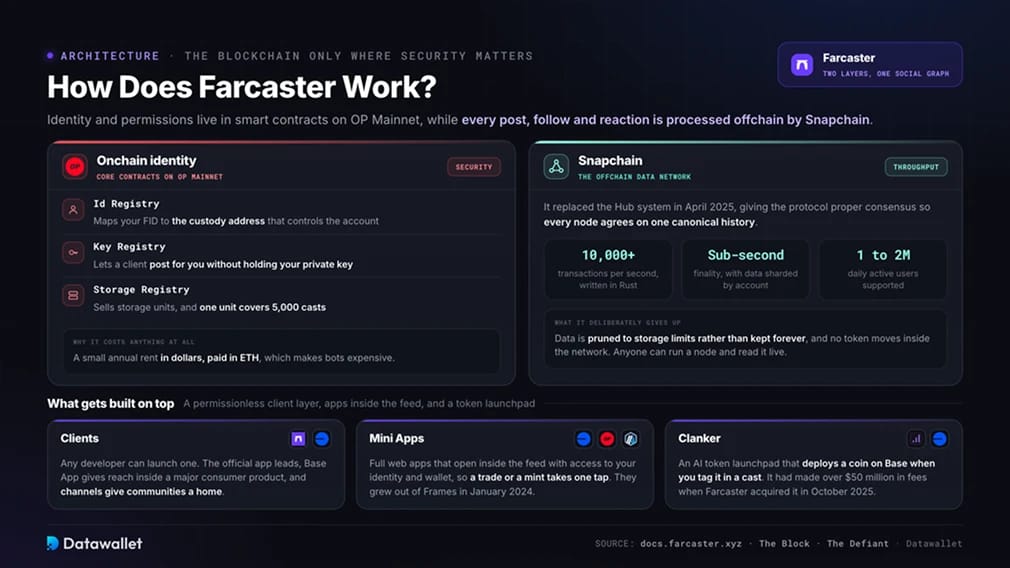
Farcaster relies on a decentralized network of hubs that replicate data to ensure no single point of failure. Understanding how these hubs sync is essential for creators building on the protocol, as it directly impacts data availability and uptime.
How does Farcaster hub sync work?
Hub synchronization operates in two distinct phases: gossip and diff sync. The gossip phase allows hubs to quickly discover new messages, while the diff phase ensures all hubs hold identical historical state. This two-step process maintains consistency across the network without overwhelming bandwidth.
What are delta graphs in Farcaster?
Delta graphs track changes in the social graph rather than storing the entire state repeatedly. By only syncing the differences (deltas) between states, hubs reduce storage requirements and sync times. This efficiency is critical for scaling the network as user activity increases.
Can I run my own Farcaster hub?
Yes, you can run a personal hub using open-source software, though it requires significant server resources. Self-hosting gives you full control over your data but comes with the operational burden of maintaining uptime and syncing large datasets from the network.
Is Farcaster data secure during sync?
Farcaster uses cryptographic signatures to verify every message during sync, preventing tampering or replay attacks. Each hub validates the digital signature of the sender before accepting new data, ensuring that only authorized actions are recorded on the chain.
No comments yet. Be the first to share your thoughts!