how hub sync actually works
If you’ve spent time in decentralized social networks, you’ve likely heard the term “sync” thrown around loosely. It’s often treated as a synonym for “logging in” or “refreshing your feed.” That’s a misunderstanding of what’s happening under the hood. In Farcaster, sync isn’t about displaying content; it’s about maintaining a consistent, decentralized state across a distributed network of servers known as Hubs.
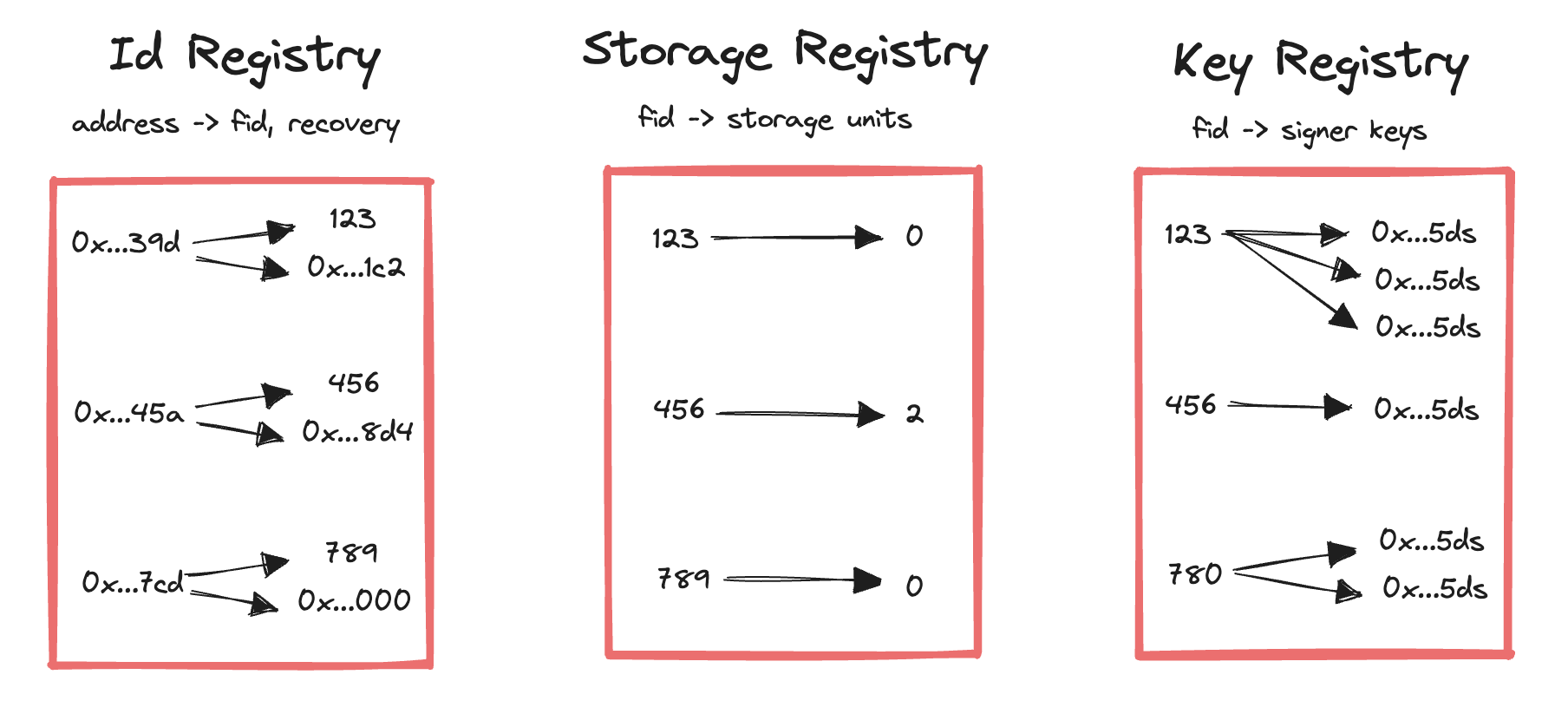
At its core, Farcaster sync is a two-phase protocol designed to keep every Hub in the network aligned with the latest social graph data. When a user posts a message, that data doesn’t just appear everywhere instantly. It starts with gossip, a rapid exchange mechanism where nodes share new information with their immediate peers. This ensures quick propagation of fresh data across the network.
Once the gossip phase spreads the word, the diff sync phase takes over. This is where the heavy lifting happens. Hubs compare their local state against their peers to identify and retrieve any missing data points. Think of it like a distributed database that constantly reconciles its records to ensure no one is out of step. Without this rigorous two-step process, the network would fracture, with different users seeing different versions of the truth.
This architecture is what allows Farcaster to remain resilient and censorship-resistant. Because every Hub operates independently yet stays synchronized through this protocol, there is no single point of failure. The network’s integrity relies on this constant, background negotiation of data, ensuring that the social graph remains accurate and up-to-date for every participant.
Core tools for monitoring sync health
Syncing isn't just about connecting; it's about keeping your data in step with the wider network. If your client falls behind, your posts won't reach everyone, and your app will feel sluggish. To fix this, you need visibility into latency, block height, and data availability.
The first step is checking the raw data. Most developers use the official Farcaster documentation to understand the sync endpoints, but seeing the numbers in real-time is faster. A live chart of the Farcaster network activity helps you spot dips in sync speed before they become user complaints.
For deeper dives into specific hub providers, a comparison table is essential. Different hubs have different replication speeds and uptime records. You can use this table to compare the top contenders based on their sync performance and data availability.
| Provider | Sync Speed | Data Availability |
|---|---|---|
| Snapchain | Fast | High |
| Farcaster Hub | Standard | Medium |
| Third-party | Variable | Low |
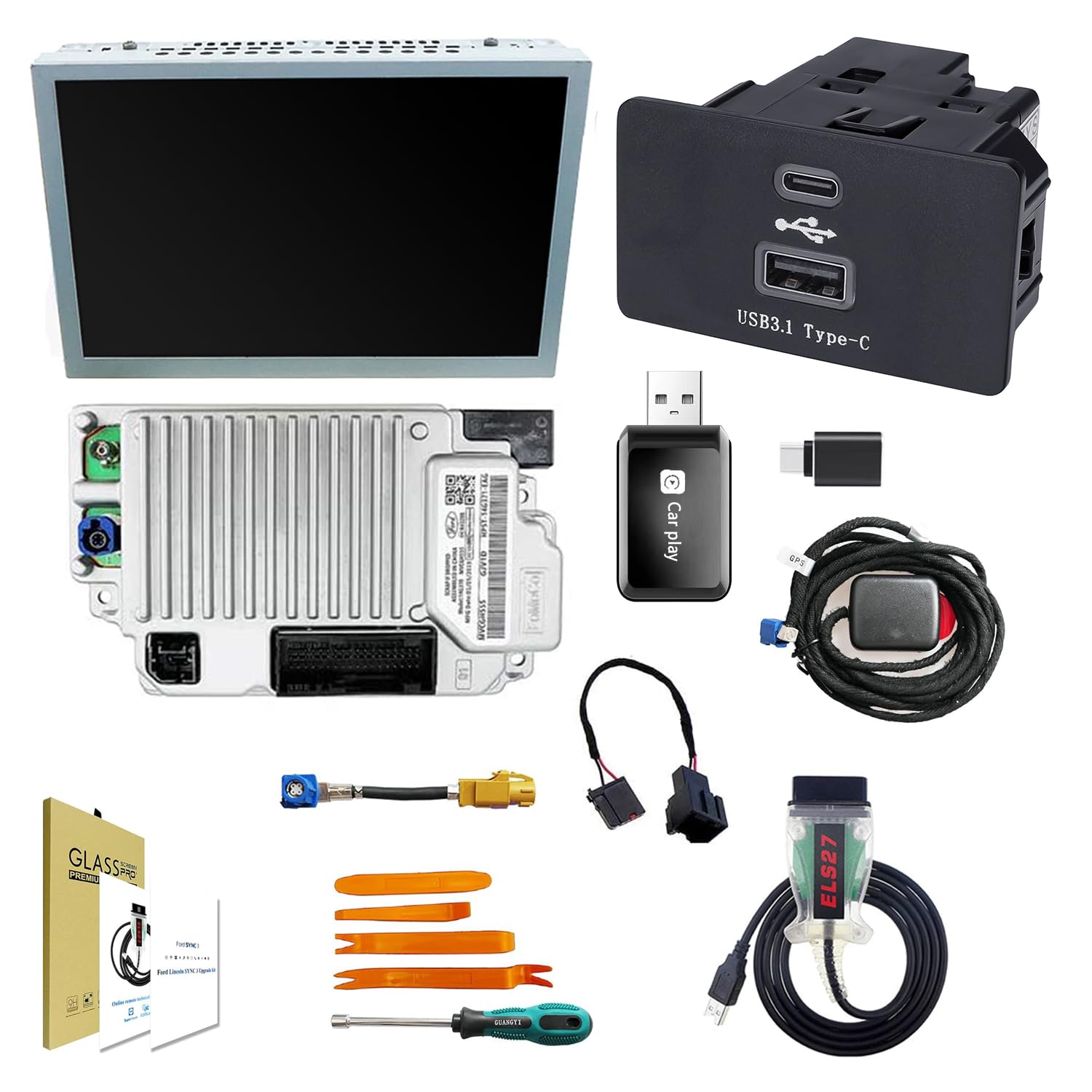
To keep your infrastructure running smoothly, you might need some hardware or software tools. These products are often recommended by developers for their reliability and ease of use.


As an Amazon Associate, we may earn from qualifying purchases.
Leveraging Real-Time Data for Monetization
Farcaster Sync works best as a sequence, not a scramble through settings. Do the minimum first: confirm compatibility, connect the core hardware, update only when needed, and test the result before adding optional features. That order keeps the task understandable and makes failures easier to isolate. After each step, pause long enough for the interface to finish syncing. Many setup problems are timing problems disguised as configuration problems. If the same step fails twice, record the exact error, restart the smallest affected piece, and retry before moving deeper.
The simplest way to use this section is to keep the setup small, verify each change, and record the stable configuration before adding optional accessories.
setting up your own sync infrastructure
Running your own Farcaster Hub gives you direct control over your data, but it requires understanding the underlying mechanics. The sync process is not a simple download; it is a two-phase system involving gossip and diff sync. Gossip handles the rapid, peer-to-peer sharing of new messages across the network, while diff sync ensures your node catches up on any missed data by comparing its state with others.
For most builders, the decision comes down to running a self-hosted node versus using a managed service. Self-hosting is ideal for those needing guaranteed data availability and complete sovereignty over their infrastructure. Managed services, on the other hand, offer a turnkey solution where the provider handles the heavy lifting of synchronization and uptime.
If you choose to run a Hub, you will need to configure your node to connect to the Farcaster network. This involves setting up the necessary environment variables and ensuring your server has sufficient resources to handle the gossip protocol. The goal is to maintain a consistent view of the network state, which is critical for any onchain growth strategy that relies on real-time data.
Decide between self-hosting or a managed provider. Self-hosting requires technical expertise but offers full control. Managed services reduce operational overhead but may introduce third-party dependencies.
Set up your node to connect to the Farcaster gossip network. This involves configuring peer discovery and ensuring your firewall allows the necessary ports for peer-to-peer communication.
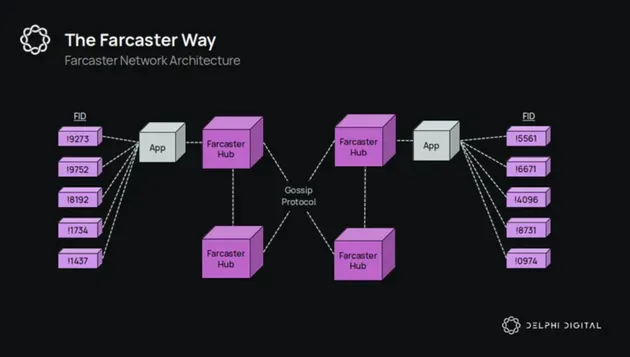
Monitor your node’s synchronization progress. Use diagnostic tools to ensure your node is catching up via diff sync and that it is receiving gossip messages from other hubs.
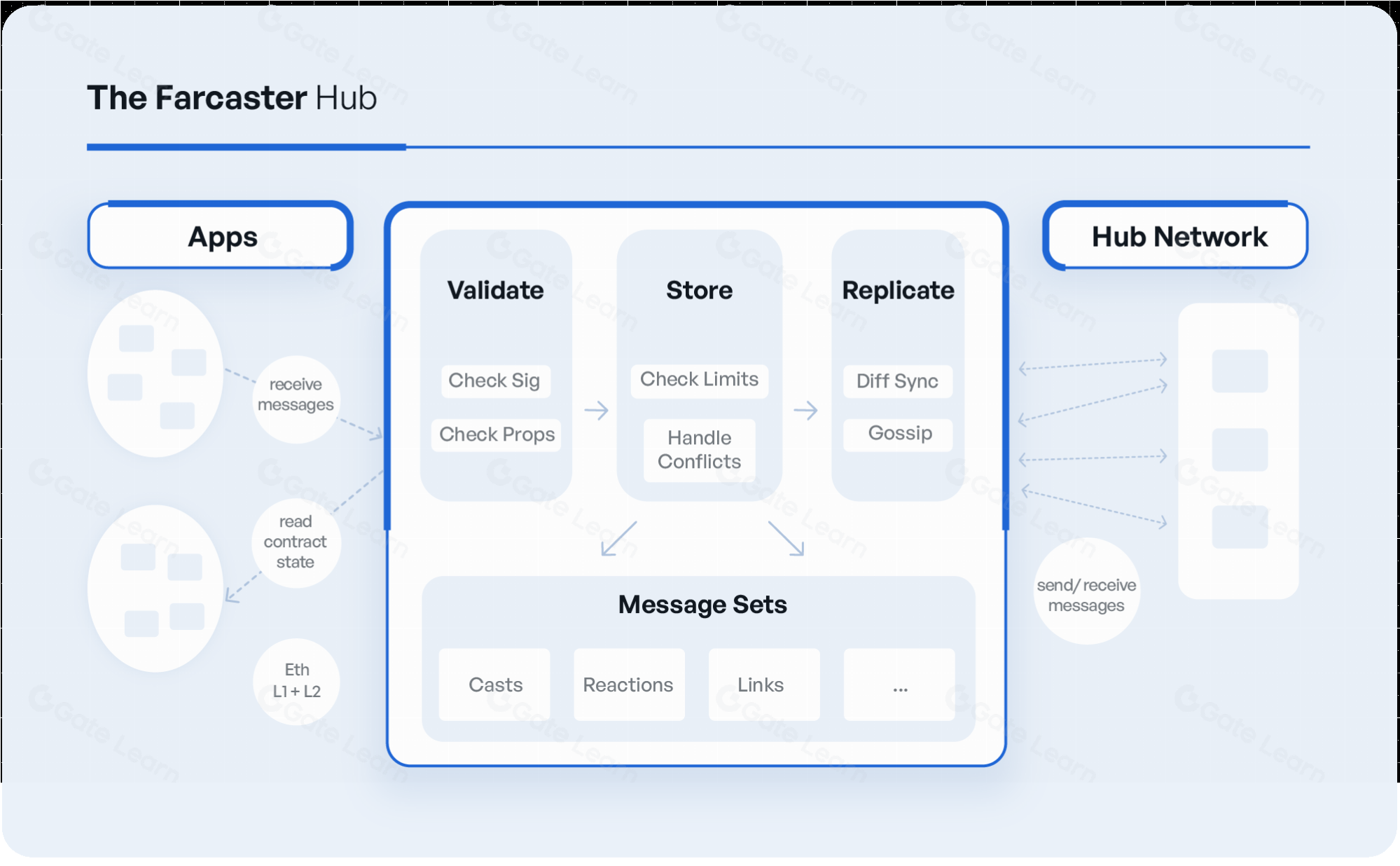
Send test casts and reactions to verify your node is processing and storing data correctly. This step confirms that your sync infrastructure is ready for production use.
-
Ensure your node is connected to at least 3-5 peers
-
Verify diff sync is progressing without errors
-
Confirm gossip messages are being received and relayed
-
Test data retrieval for recent casts and reactions
Common Questions About Farcaster Sync
Syncing a Farcaster hub involves more than just downloading data; it requires maintaining a consistent state across a decentralized network. Understanding the mechanics behind this process helps developers and operators troubleshoot latency issues and ensure their nodes are participating correctly in the protocol.
How does the sync process work?
The synchronization between hubs follows a two-phase approach designed to balance speed with data integrity. First, the gossip phase allows nodes to rapidly share new message hashes and discover what data they are missing. This is followed by the diff sync phase, where hubs exchange the actual data blocks (delta graphs) needed to bring their local state in line with the network. This method minimizes bandwidth usage by only transferring changes rather than the entire history.
Is Farcaster data private?
Farcaster is an open, public social protocol, meaning all casts, reactions, and profile updates are visible to anyone running a hub. There is no built-in encryption for social data. Privacy on the platform relies on user discretion and the ability to curate your feed using client-side tools. If you require private messaging, you must use off-chain encrypted channels or specialized secure messaging protocols that sit on top of the base layer, as the core sync mechanism is not designed for confidentiality.
What is Farcaster used for?
At its core, Farcaster is a decentralized social networking protocol built on Ethereum. It allows users to create profiles, publish "casts" (posts), and follow others without relying on a centralized corporation. Beyond basic social interaction, developers use the open API to build decentralized applications (dApps), frames, and onchain identity tools that leverage the social graph for new forms of digital interaction and community governance.
Helpful gear
Use these product recommendations as a starting point, then choose the size, material, and price point that fit how you actually use the gear.
As an Amazon Associate, we may earn from qualifying purchases.
No comments yet. Be the first to share your thoughts!