How Farcaster hubs sync data
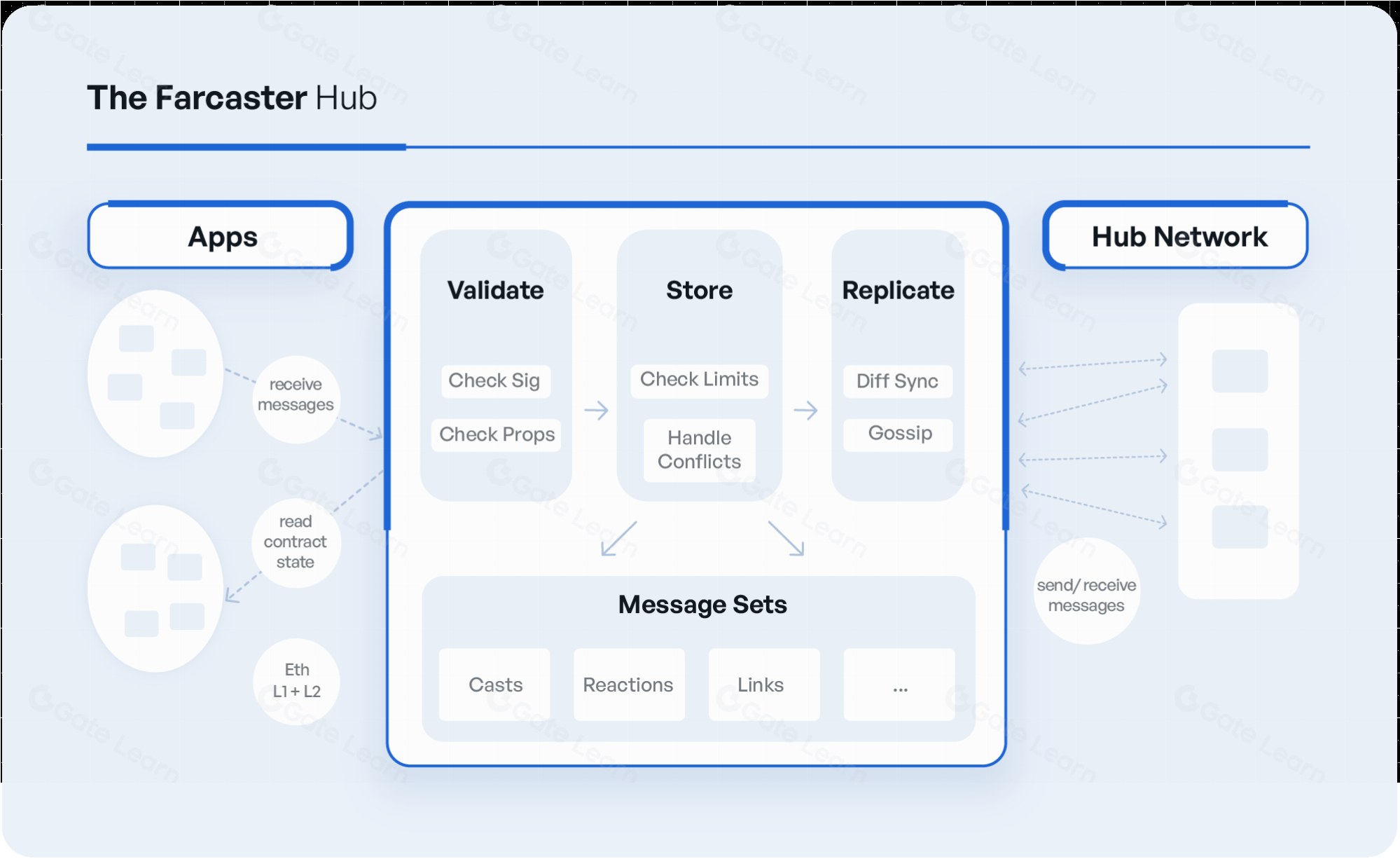
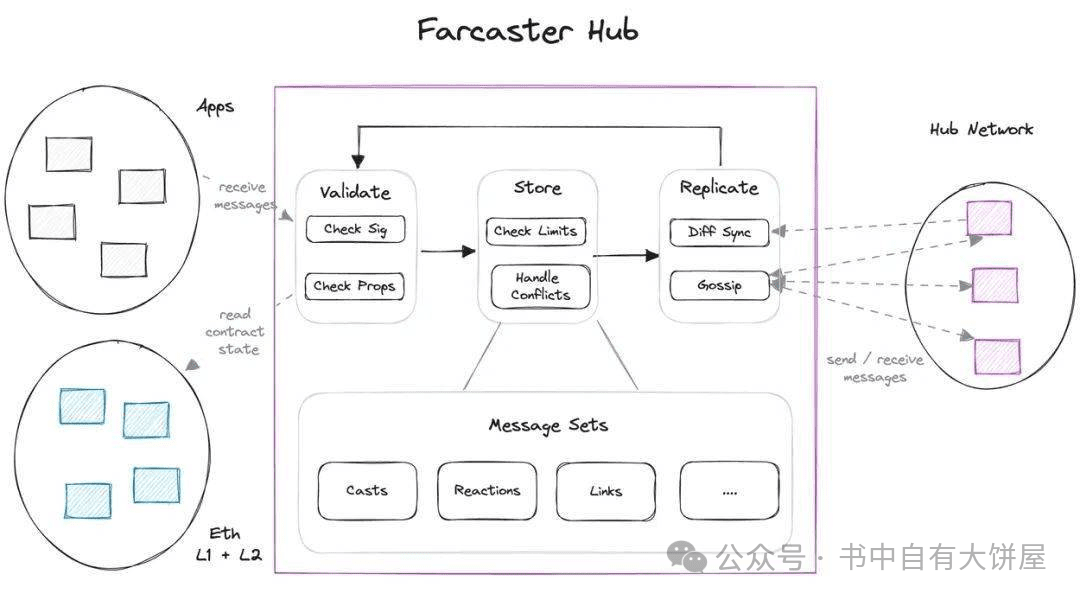
The "Sync" in Farcaster isn't a user-facing feature; it is the underlying network protocol that keeps the decentralized social graph consistent. Because Farcaster is a distributed network rather than a centralized database, every hub must agree on the state of the network. This agreement is reached through a two-phase synchronization process: snapshot sync and gossip sync.
When a new hub joins the network or reconnects after downtime, it performs a snapshot sync. This is a bulk operation where the new hub downloads a compressed state of the network from its peers. It effectively fast-forwards the new hub to a recent point in time, bringing it close to the current state without needing to process every single message from the beginning. This phase is critical for rapid onboarding and recovery.
Once the snapshot is complete, the hub switches to gossip sync. This is a delta-based system where hubs continuously exchange only the new changes (deltas) since their last sync. As users post messages, cast reactions, or update profiles, these changes are propagated across the network via gossip protocols. Each hub validates and applies these deltas to its local database, ensuring that all participating nodes eventually converge on the same truth.
This hybrid approach balances speed and accuracy. Snapshot sync provides the initial momentum, while gossip sync maintains real-time consistency. Understanding this mechanism is essential for anyone analyzing Farcaster data or building on top of its infrastructure, as it dictates how data is stored, retrieved, and verified across the network.
Cross-platform sync tools
Cross-posting bridges the gap between Farcaster and legacy platforms like X, allowing you to maintain presence without managing two separate feeds. Tools like Farcaster Sync handle the heavy lifting, automatically mirroring posts from X to Farcaster and the Base app. This approach prioritizes reach over native engagement, letting you tap into larger audiences while keeping your decentralized identity intact.
The infrastructure behind these sync tools is often lightweight, focusing on reliability rather than feature bloat. By automating the copy-paste friction, creators can focus on content strategy rather than distribution logistics. The result is a streamlined workflow where your primary post on X serves as the source of truth for your Farcaster presence.
To help you choose the right bridge, here is a comparison of the major sync options available today.
Creator monetization models
Farcaster flips the traditional social media script by letting creators monetize attention directly onchain. Instead of relying on ad revenue or platform-sponsored grants, the network uses pluralistic reward mechanisms that align incentives across users, developers, and protocols. This shift reduces friction and gives creators multiple ways to capture value from their audience.
At the center of this economy is the $DEGEN token, which serves as a foundational utility for tipping, casting boosts, and governance participation. Its price action reflects the broader sentiment of the ecosystem, making it a key barometer for creator viability.
The platform’s design encourages a "pluralistic" approach to rewards, where value isn't funneled through a single gatekeeper. A recent academic analysis highlights how these diverse token-based mechanisms reshape user behavior and platform dynamics by allowing multiple revenue streams to coexist. Creators can earn through direct tips, subscription-based channels, or by building tools that other users pay for, creating a resilient economic layer.
For creators looking to build in this space, the barrier to entry is lower than traditional social platforms because the infrastructure is open and composable. You don't need to negotiate with a central platform to launch a monetization feature; you can deploy it directly. This freedom has led to a surge in experimental monetization models, from niche paid channels to community-owned data layers.
While the ecosystem is still maturing, the shift toward onchain incentives offers a more transparent and equitable way for creators to sustain their work. By removing the middleman, Farcaster allows attention to translate directly into economic value, fostering a more authentic and engaged community.
Analyzing Farcaster Data for Strategy
Understanding the Farcaster ecosystem requires more than just posting; it demands a clear view of what is actually moving. Users and developers rely on specific tools to track trending users, channels, and topics, turning raw protocol data into actionable market signals. Without this analysis, strategy is often just guessing.
The primary challenge in Farcaster data analysis is volume. The protocol generates high-frequency interactions, making it difficult to distinguish between organic growth and coordinated activity. Official dashboards and third-party trackers help filter this noise by highlighting verified trends and consistent engagement patterns rather than fleeting spikes.
For developers and investors, visualizing this data is essential. Tracking the performance of key assets like $DEGEN provides a proxy for network health and user sentiment. By monitoring these metrics alongside on-chain activity, participants can better time their entries and understand the underlying momentum of the platform.
Build a Sync Strategy for Growth
Syncing the Farcaster network locally gives you raw access to the social graph, but raw data doesn’t grow an audience. You need a strategy that turns chain data into community signals. Think of your sync node as a radar system; it only helps if you know how to interpret the blips.
Start by defining your query scope. Are you tracking specific casters, analyzing engagement patterns, or monitoring protocol health? The Farcaster docs provide clear examples for setting up local queries, but you must tailor them to your niche 1.
Next, automate your data ingestion. Manual checks won’t scale. Use cron jobs or serverless functions to pull new casts and frames into your database daily. This ensures your insights are current without requiring constant manual oversight.
Finally, build a feedback loop. Use the data to identify key influencers or trending topics, then engage authentically. Don’t just broadcast; use your sync infrastructure to listen and respond. Growth in decentralized social comes from being present, not just present with data.
Helpful gear
Use these product recommendations as a starting point, then choose the size, material, and price point that fit how you actually use the gear.

As an Amazon Associate, we may earn from qualifying purchases.
No comments yet. Be the first to share your thoughts!