Why sync matters for network health
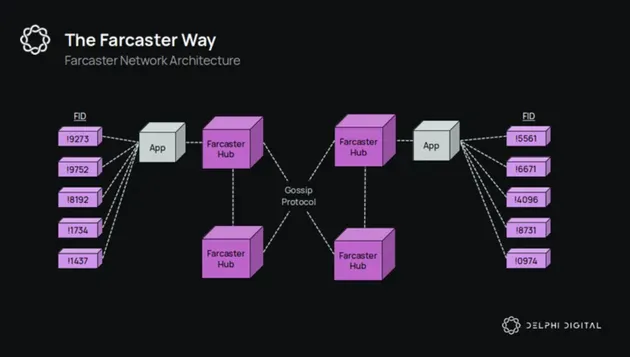
Farcaster is a decentralized social protocol, but it doesn’t run on a single server. Instead, it relies on a distributed network of independent servers called hubs. These hubs store user data—casts, reactions, and links—and they must stay in perfect agreement with each other. If they don’t, the network fractures. This is where sync comes in.
The sync mechanism is the heartbeat of Farcaster. It is the process by which hubs exchange data to ensure that every user sees the same timeline, regardless of which hub they are connected to. Without reliable synchronization, hubs drift apart. Users might see different versions of the same conversation, or miss updates entirely. This drift degrades the user experience and undermines the trust that makes decentralized social media viable.
Farcaster uses a delta-based sync model. Instead of re-transmitting entire datasets, hubs compare their state and only copy the new changes (deltas). This approach is efficient and scalable, but it requires constant, reliable communication between nodes. If a hub goes offline or fails to sync, it falls behind, creating a fragmented view of the network. For creators and developers, this means that infrastructure stability is not just a backend concern—it is a prerequisite for growth. If the sync layer is unstable, the entire ecosystem suffers.
Sync is the heartbeat of Farcaster. Without reliable delta-based synchronization, hubs drift, and user experience degrades.
This fragility highlights why infrastructure analysis is critical. As the network grows, the volume of data increases, and the cost of maintaining sync rises. Nodes must be robust, and the protocols must be efficient. Otherwise, the network becomes slow, unreliable, or expensive to run. For anyone building on Farcaster, understanding the sync mechanism is the first step to building a resilient application.
How hub synchronization works
Farcaster doesn't rely on a single server to hold the entire social graph. Instead, it uses a decentralized network of independent nodes called hubs. For the Farcaster Sync analysis, understanding how these hubs talk to each other is essential. The protocol uses three distinct methods to keep data consistent across the network: snapshot sync, gossip sync, and delta sync. Each method serves a different purpose, balancing speed, accuracy, and bandwidth.
Snapshot sync
When a new hub joins the network or reconnects after being offline for a long time, it needs a complete picture of the current state. Snapshot sync provides this by fetching a compressed representation of the network's status. Think of it like downloading a full map of a city rather than walking every street. This method is fast and ensures the new hub starts with an accurate baseline, even if it means transferring a larger initial dataset.
Gossip sync
Once a hub is mostly up to date, it switches to gossip sync. This method uses a peer-to-peer protocol (libp2p) to share new messages as they happen. It is designed for speed and low latency. However, gossip sync is "lossy," meaning some messages might be missed during transmission. This is acceptable because the protocol has other mechanisms to fill in those gaps. It keeps the network responsive and allows users to see updates in near real-time.
Delta sync
Delta sync is the workhorse of Farcaster's consistency model. It focuses on efficiency by only transferring the differences (deltas) between what a hub already has and what it needs. If Hub A has a message that Hub B doesn't, they compare their lists and sync only that specific change. This minimizes bandwidth usage and keeps the network lean. According to official protocol discussions, this delta-based approach is what allows Farcaster to scale effectively without overburdening individual hub operators.
Creator monetization through onchain data
The infrastructure behind Farcaster Sync does more than just move data; it creates a new currency for attention. By making onchain data accessible, the network allows creators to see exactly how their content performs in real-time, rather than waiting for opaque algorithmic feedback loops. This transparency is the foundation for a creator economy that pays based on genuine engagement, not just impressions.
Traditional social media platforms keep their data siloed, making it difficult for creators to understand their audience or build sustainable revenue streams. Farcaster flips this model. With Sync-enabled data access, creators can analyze follower behavior, track sentiment, and identify high-value community members. This level of insight allows for targeted engagement that feels personal rather than transactional, turning passive viewers into active supporters.
| Feature | Traditional Social Media | Farcaster Onchain |
|---|---|---|
| Data Access | Locked behind paywalls | Public and open |
| Revenue Model | Ad revenue share | Direct tips and subscriptions |
| Audience Insight | Limited demographics | Full onchain history |
| Content Ownership | Platform controlled | Creator owned |
This shift enables new monetization models that were previously impossible. Creators can offer exclusive content to users who hold specific tokens or have a certain level of onchain activity. They can also charge for access to their data-driven insights, helping other creators optimize their strategies. The result is a more equitable ecosystem where value flows directly from the community to the creator.
Building with the sync protocol
Farcaster Sync analysis reveals that the real value for developers isn't just in watching the network—it's in owning the data. Syncing the Farcaster network to your own machine turns public social signals into a queryable local database. This setup is the foundation for building mini-apps that require low latency and high reliability, independent of third-party API rate limits.
To get started, you need to understand the architecture. Sync involves replicating the Farcaster hub data to your local Postgres instance. Once synced, you can run complex SQL queries against casts, reactions, and profiles. This approach is essential for data analysis tools that need to aggregate historical sentiment or track specific user behaviors across the network.
For mini-apps, this local data layer means you can build features that feel instant. Instead of fetching data from a remote server every time a user interacts, your app reads from the local sync. This reduces latency and allows for more sophisticated filtering. You can build dashboards, analytics tools, or even custom client interfaces that leverage the full depth of the Farcaster graph.
The official documentation at docs.farcaster.xyz provides the technical specs for running a hub and syncing data. GitHub discussions also offer community insights on best practices for maintaining sync health. By leveraging these resources, you can build robust applications that stand on their own data infrastructure, rather than relying on fragile external dependencies.
Frequently asked: what to check next
The Farcaster Sync analysis often sparks curiosity about how a decentralized network operates without a central server. Below are answers to the most common questions regarding its infrastructure, token associations, and ecosystem alternatives.
These questions highlight why the Farcaster Sync analysis focuses on infrastructure resilience. By understanding the underlying Ethereum integration and hub synchronization, you can better evaluate the reliability of this social layer.
No comments yet. Be the first to share your thoughts!