What Farcaster Sync Actually Does
Farcaster Sync is the critical infrastructure layer that ensures data consistency across decentralized hubs. It is not a cross-posting tool or a simple backup system. Instead, it is the protocol-level mechanism that allows independent hubs to share and verify user data, ensuring the social graph remains consistent across the network.
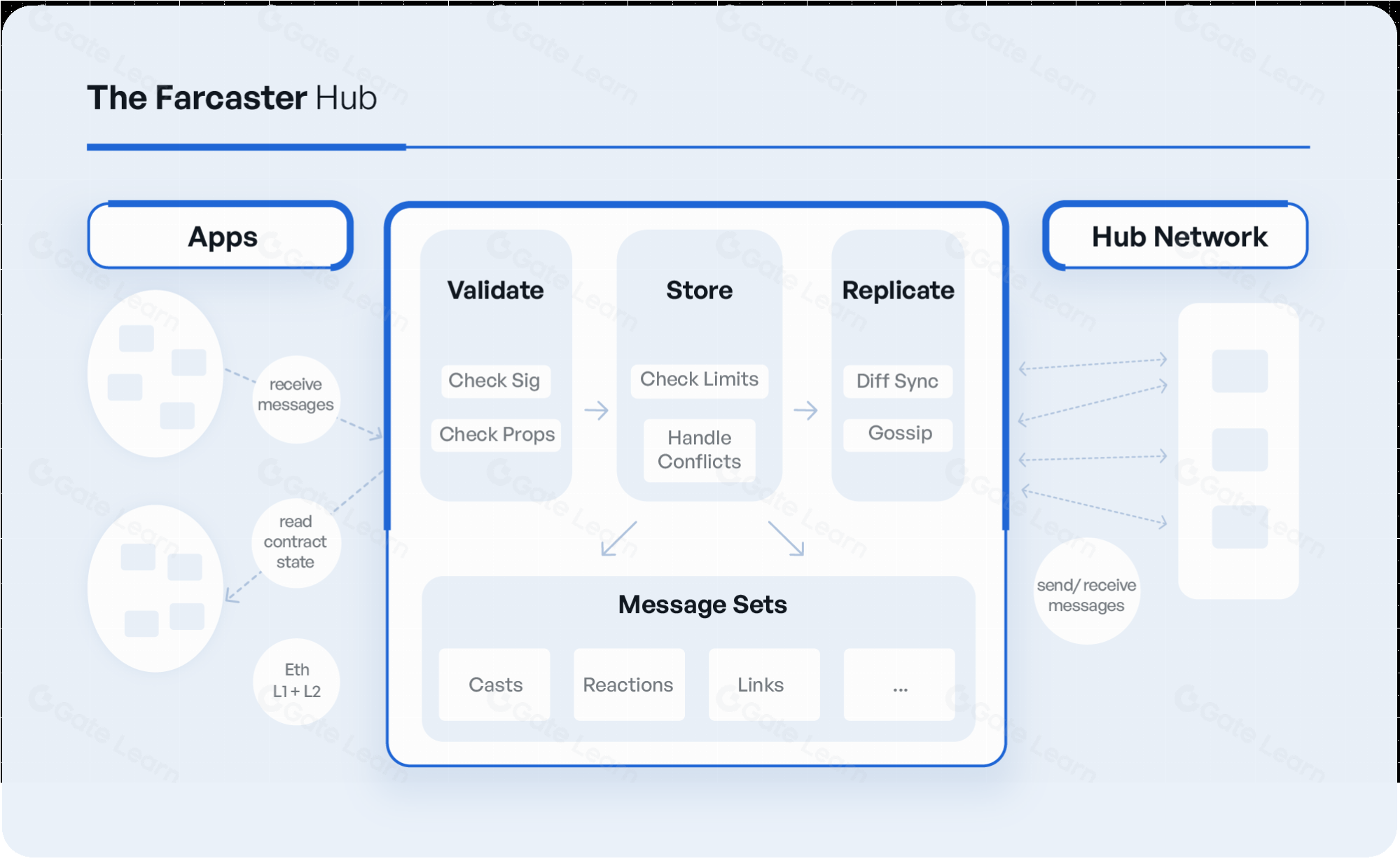
When a user posts a message on Farcaster, it is first stored on a single hub. Sync then propagates that message to all other hubs in the network. This process ensures that every hub has the same view of the social graph, regardless of which hub the user interacts with. Without sync, the network would fragment into isolated silos, each holding a different version of the truth.
The sync process is delta-based, meaning hubs sync by comparing and copying new deltas (changes) rather than re-syncing the entire dataset. This efficiency is crucial for maintaining performance as the network grows. Hubs exchange these deltas, verify their validity, and update their local databases accordingly.
This mechanism distinguishes Farcaster from centralized social platforms. In a centralized system, a single server holds the data. In Farcaster, the data is distributed, and sync ensures that all participants see the same information. This decentralization is what gives Farcaster its resilience and censorship resistance.
The sync model is designed to be robust and efficient. It uses a multi-channel sync process to handle the high volume of messages and ensure that no hub is overwhelmed. This design allows Farcaster to scale while maintaining the integrity of the social graph.
How the Delta Graph Keeps Hubs in Sync
Farcaster relies on a delta-based synchronization model rather than full-dataset replication. Instead of downloading the entire history of every message every time they connect, hubs compare their current state against known checkpoints. This approach means hubs only pull the "deltas"—the specific changes, adds, or removes that have occurred since the last sync point. It is the difference between mailing a complete library versus sending only the updated pages. This mechanism is fundamental to the network's scalability, allowing it to handle high throughput without overwhelming individual nodes with redundant data transfer.
The technical core of this process is the Delta Graph, a directed acyclic graph (DAG) that tracks message dependencies. When a hub receives a new message, it verifies the message's validity and checks its position in the graph relative to existing messages. If the new message references a parent message that the hub has not yet seen, the hub must first sync those missing ancestors. This ensures that the graph remains consistent and acyclic across the entire network. The hub does not just copy data; it validates the causal history of every update, ensuring that no message is accepted out of order or without proper context.
This delta-centric design optimizes both bandwidth and storage. For users running their own hubs, it means significantly lower infrastructure costs and faster initial sync times. For the network at large, it prevents a single point of failure from becoming a bottleneck. If one hub goes offline, others do not need to re-download the entire history to catch up; they simply resume from the last known delta. This resilience is critical for a decentralized social protocol where uptime and data integrity are paramount. The result is a system that scales efficiently, keeping the social graph accessible and consistent across all participating nodes.
Hub Architecture and Node Setup
Running a reliable Farcaster hub is the backbone of a trustworthy Farcaster Sync guide implementation. Unlike lightweight clients that fetch data on demand, a hub stores the complete history of messages, ensuring you have access to the full context of the network. This architecture requires specific hardware and a clear understanding of how hubs communicate via the gossip protocol.
Hardware Requirements for Stability
To maintain sync with the Farcaster network, your infrastructure needs to handle significant write loads. A high-end VPS with a high-frequency CPU and ample RAM is essential for node performance. The database must be robust enough to store millions of messages without lagging. If your hardware falls short, your hub will fall behind the network, causing data gaps for any applications relying on it.
Understanding the Gossip Protocol
Hubs do not operate in isolation. They use a gossip protocol to propagate messages across the network. When a user posts, the message is sent to their connected hub, which then gossips it to other hubs. This decentralized propagation ensures that data spreads quickly and redundantly. Understanding this flow is critical for debugging sync issues and ensuring your hub is properly connected to the broader network.
Step-by-Step Node Configuration
Setting up your node involves a few precise steps to ensure it starts correctly and stays in sync.
Checklist for Production Readiness
Before putting your hub into production, verify these critical items:
-
Hardware meets minimum CPU and RAM specs
-
Database engine is configured for high write throughput
-
Network firewall allows inbound gossip ports
-
Backup strategy for local storage is in place
-
Monitoring alerts for sync lag are active
A properly configured hub ensures that your Farcaster Sync guide remains accurate and reliable, providing a solid foundation for any decentralized application built on top of the protocol.
Monetization and Developer Access
The real value of a Farcaster Sync guide isn't just in keeping data consistent; it's in unlocking the economic layer that sits on top of that consistency. When hubs reliably sync data, developers can build applications that charge for access, embed interactive frames, and track user engagement with precision. Without this infrastructure, the protocol remains a chat room. With it, it becomes an open economy.
For builders, the choice of data access defines the monetization strategy. You can interact directly with the hub network, but that requires managing complex node infrastructure. Alternatively, you can use third-party API aggregators like Neynar, which handle the heavy lifting of data normalization and availability. This section compares these two paths to help you decide where your development effort should go.
Direct Hub Interaction vs. API Aggregators
Choosing between direct hub interaction and using an API aggregator like Neynar depends on your need for control versus speed. Direct access offers maximum flexibility but introduces significant operational overhead. Aggregators provide a streamlined developer experience, allowing you to focus on building features rather than maintaining database integrity.
| Feature | Direct Hub Access | API Aggregators (e.g., Neynar) |
|---|---|---|
| Data Normalization | Manual parsing of raw protobufs | Automatic JSON conversion |
| Infrastructure Cost | High (requires node hosting) | Low (subscription or pay-per-use) |
| Query Complexity | Complex (requires custom indexing) | Simple (REST/GraphQL endpoints) |
| Monetization Speed | Slow (build time is high) | Fast (API ready in hours) |
For most developers launching monetizable frames or new apps, API aggregators offer the fastest route to market. Services like Neynar provide robust endpoints that abstract away the complexity of the Farcaster protocol, allowing you to fetch user data, frames, and casts with simple HTTP requests. This allows you to integrate payment logic or subscription gates quickly, turning your Farcaster Sync guide insights into immediate product features.
While direct hub interaction remains valuable for projects requiring extreme data sovereignty or custom indexing, the barrier to entry is steep. The Farcaster documentation and official GitHub repositories provide the technical specs for direct access, but for 90% of use cases, the efficiency gained from using a third-party API outweighs the benefits of self-hosting. Start with an API to validate your monetization model, then consider direct access only if your scale demands it.
5. Common Sync Failures and Fixes
Even with robust infrastructure, Farcaster sync isn't always instantaneous. When a hub falls behind, users see stale data, and trust in the social layer erodes. Understanding these failures helps you diagnose whether the issue is network latency, storage bloat, or a deeper protocol divergence.
Lag and Stale Data
The most common issue is simple lag. If your hub's lastSyncTimestamp is significantly behind the network leader, your local state is outdated. This often happens after a restart or a brief network outage. Check your hub logs for sync errors. If the lag is minor, a manual sync command usually resolves it. For persistent lag, verify your node's uptime and ensure no firewall rules are blocking port 2283.
Data Divergence
Data divergence occurs when your hub disagrees with the broader network on the validity of a message. This is rare but serious. It usually stems from a corrupted database or a bug in an older hub version. If you suspect divergence, the safest fix is to prune your local database and perform a full resync from the genesis block. This ensures your state matches the canonical chain. Always backup your data before pruning.
Storage Bloat
Hubs store every valid message, which can lead to significant disk usage over time. If your hub is struggling with I/O performance, check your disk space. Farcaster hubs do not automatically prune old data unless configured to do so. Consider implementing a retention policy for older casts or frames if storage is a bottleneck. Monitor your disk usage regularly to prevent sudden outages.
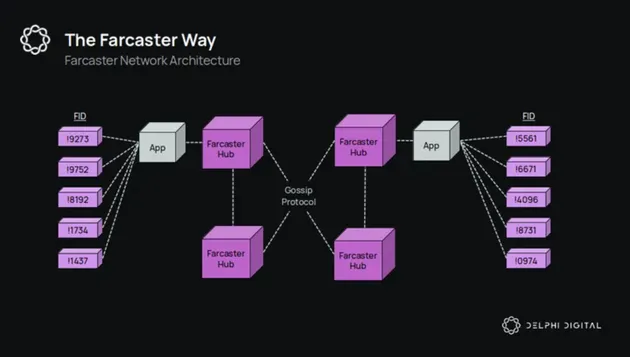
Visualizing the Delta Graph
Understanding the Delta Graph is essential for debugging sync issues. The following chart illustrates how hubs exchange deltas and verify message validity within the DAG structure.
No comments yet. Be the first to share your thoughts!