What Farcaster Sync actually does
Farcaster Sync operates as a bridge between X and Farcaster, automating the distribution of your content across both platforms. When you post on X, Sync automatically mirrors that message to your Farcaster feed and the Base app. This eliminates the manual copy-paste workflow, allowing you to maintain a presence on two distinct networks simultaneously.
The tool functions as a third-party integration layer rather than a native protocol feature. It connects your accounts to ensure your posts appear on Farcaster without requiring you to leave your X interface. This automation is particularly valuable for builders and creators who need to amplify their reach across the crypto and social layers.
By linking your accounts, you are essentially setting up a pipeline for audience growth. Your X followers can discover your Farcaster identity through these mirrored posts, while your Farcaster audience gains visibility into your X activity. This cross-pollination helps consolidate your personal brand across the decentralized web.
Compare top sync tools and methods
Syncing your X presence to Farcaster isn't a single switch; it's a choice of infrastructure. Your decision depends on how much control you want over your data, your technical comfort, and whether you prioritize automated scaling or manual curation. The landscape splits into three distinct approaches: the open-source relay network, client-native integrations, and third-party automation bots.
Each method carries different trade-offs regarding reliability, cost, and privacy. Understanding these differences helps you avoid the common pitfall of relying on a single point of failure that might break when X changes its API or when a bot gets rate-limited.
Hubble: The Open-Source Relay
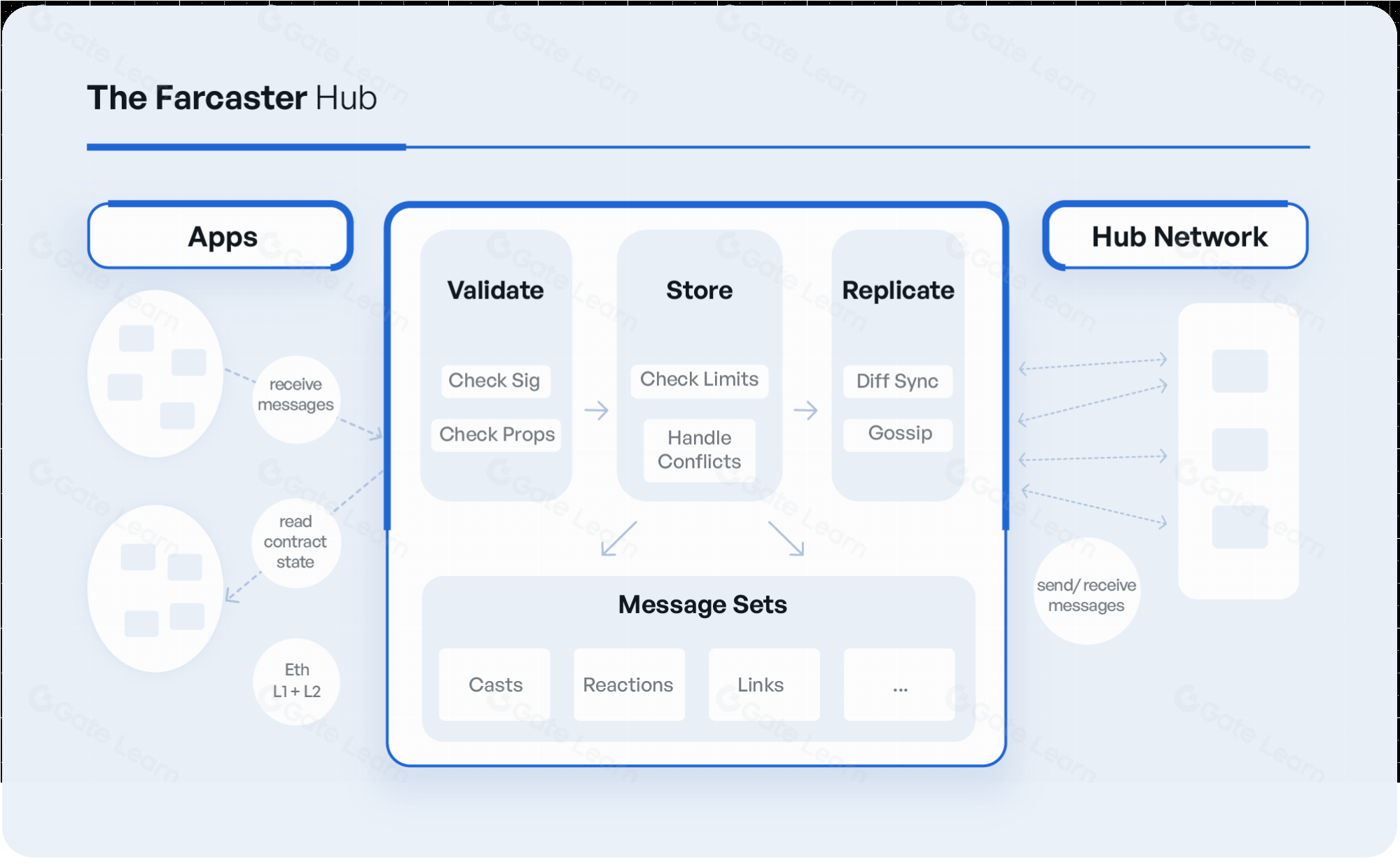
Hubble acts as the primary public relay for the Farcaster network. It is not a sync tool per se, but the underlying infrastructure that most sync tools rely on to broadcast your casts. Running or connecting to a Hubble instance gives you the highest degree of decentralization and resilience. If you are building a custom sync solution or want to ensure your posts reach the widest possible audience through the most robust node, Hubble is the foundational layer.
- Best for: Developers and power users who want maximum control and reliability.
- Cost: Free (open source), but requires technical setup.
- Reliability: High, as it is the standard protocol layer.
Base App Integration
The Base App, built by the Coinbase team, offers a streamlined way to interact with Farcaster directly within a familiar mobile environment. While primarily a client, its integration capabilities allow for smoother onboarding and cross-platform consistency. If your goal is to grow your Farcaster audience by leveraging the existing user base of Base and Coinbase, this is the most frictionless entry point. It reduces the cognitive load for users who are already in the Base ecosystem.
- Best for: Users prioritizing ease of use and mobile accessibility.
- Cost: Free.
- Reliability: High, backed by significant engineering resources.
Third-Party Bots (e.g., Farcaster X Connector)
Third-party bots like the Farcaster X Connector automate the process of cross-posting. These tools monitor your X timeline and automatically publish casts to Farcaster. They are ideal for individuals or brands that want to maintain a presence on both platforms without manual effort. However, they introduce a dependency on an external service that may change its terms, break due to API updates, or suffer from downtime.
- Best for: Non-technical users who want automated, hands-off syncing.
- Cost: Often free or low-cost, but may have limitations.
- Reliability: Moderate, dependent on the bot's maintenance and X's API stability.
| Method | Control | Cost | Reliability |
|---|---|---|---|
| Hubble Relay | High | Free | High |
| Base App Integration | Medium | Free | High |
| Third-Party Bots | Low | Low/Free | Moderate |
Choosing the right sync method requires balancing your need for automation against your tolerance for technical complexity. For most users starting out, a third-party bot offers the quickest path to visibility. As your needs grow, migrating to a more robust infrastructure like Hubble ensures long-term stability and ownership of your social graph.
Setting up your sync workflow
Farcaster Sync works best as a sequence, not a scramble through settings. Do the minimum first: confirm compatibility, connect the core hardware, update only when needed, and test the result before adding optional features. That order keeps the task understandable and makes failures easier to isolate. After each step, pause long enough for the interface to finish syncing. Many setup problems are timing problems disguised as configuration problems. If the same step fails twice, record the exact error, restart the smallest affected piece, and retry before moving deeper.
Measuring growth from cross-posting
Syncing your X account with Farcaster is not just a technical exercise; it is a channel expansion strategy. To understand the market impact, you must track how engagement behaves across these distinct ecosystems. X operates on an algorithmic feed designed for velocity, while Farcaster relies on a social graph built on mutual followings and persistent identity. The goal of cross-posting is to translate the reach of one into the loyalty of the other.
The growth curve for Farcaster has been steep, driven by a user base seeking less noise and more direct interaction. When you sync content, you are essentially planting seeds in new soil. The initial engagement may look sparse compared to X, but the retention and depth of conversation are often higher. This difference in quality means that raw follower counts are a misleading metric for success.
To visualize this trajectory, we can look at the broader adoption trends of decentralized social protocols. The following chart illustrates the growth dynamics of the Farcaster network, showing how user activity expands over time as the ecosystem matures.
The chart above tracks Meta Platforms (FB), a proxy for the traditional social media landscape, to contrast with the decentralized growth of Farcaster. While traditional platforms show mature, saturated growth patterns, Farcaster’s early-stage metrics suggest a different kind of value creation. The key is not just volume, but the density of interaction per user.
When analyzing your own sync performance, focus on the overlap between audiences. Are X followers converting to active Farcaster casters? Use the Farcaster API to track which of your posts generate replies and casts. This data will tell you if your content resonates with the decentralized community or if it is being ignored. The metric that matters most is the signal-to-noise ratio in your new audience.
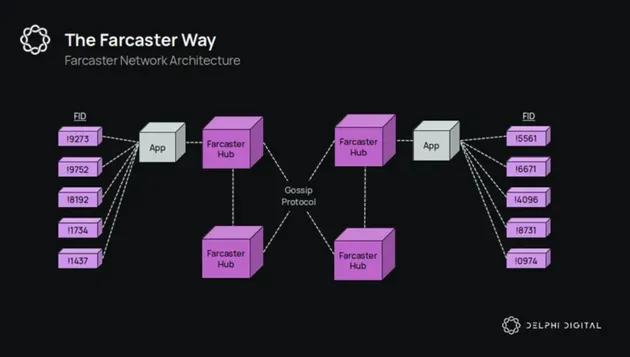
The image below from Delphi Digital highlights the structural differences in how these networks operate. Understanding this architecture helps you tailor your content strategy for each platform rather than treating them as identical mirrors.
Common mistakes to avoid
Syncing X to Farcaster is less about automation and more about translation. When you treat the connection as a simple copy-paste pipe, you often break the trust that holds a growing audience together. The following pitfalls are the most common reasons sync pipelines stall or repel users.
Spammy auto-posts
The fastest way to burn credibility is to blast every X post to Farcaster without filtering. If your X account posts three times a day, dumping all of that into a Farcaster feed creates noise. Farcaster users value depth and conversation over volume.
Instead of auto-posting everything, set up a rule to only share high-signal updates. If you are sharing market analysis, ensure the Farcaster post includes a link to the full chart or context rather than just a headline. This prevents your feed from becoming a repetitive echo chamber.
Lack of context adaptation
X and Farcaster have different cultures and technical constraints. A short, punchy X thread might not translate well as a single Farcaster post. Conversely, a dense Farcaster thread needs to be summarized for X to drive traffic back.
Avoid using the same text for both platforms. On X, you might use hashtags and tags to gain visibility. On Farcaster, these can feel cluttered. Adapt your tone: be more conversational and direct on Farcaster, and more concise on X. This respect for platform norms shows you understand your audience on both sides.
Technical failures in sync
A broken sync pipeline is worse than no sync at all. If your connector fails to post, or posts with broken links, it looks unprofessional. Regularly check your sync logs to ensure posts are landing correctly.
Use a TechnicalChart to monitor the performance of any linked assets if you are sharing market data, ensuring the visual context remains accurate. A simple Checklist can help you verify that your API keys are valid and your post templates are rendering correctly before you scale your sync efforts.
Farcaster Sync FAQ
Here are direct answers to the most common questions about scanning, chatting, and channel creation on Farcaster.
Use these answers to clarify the technical and social mechanics of Farcaster Sync for your audience.
No comments yet. Be the first to share your thoughts!