What Farcaster sync infrastructure actually is
Farcaster isn't just a social network; it's a hybrid protocol that splits the difference between blockchain security and social scalability. To understand how it works—and why sync reliability matters—you have to separate two distinct layers: identity and content.
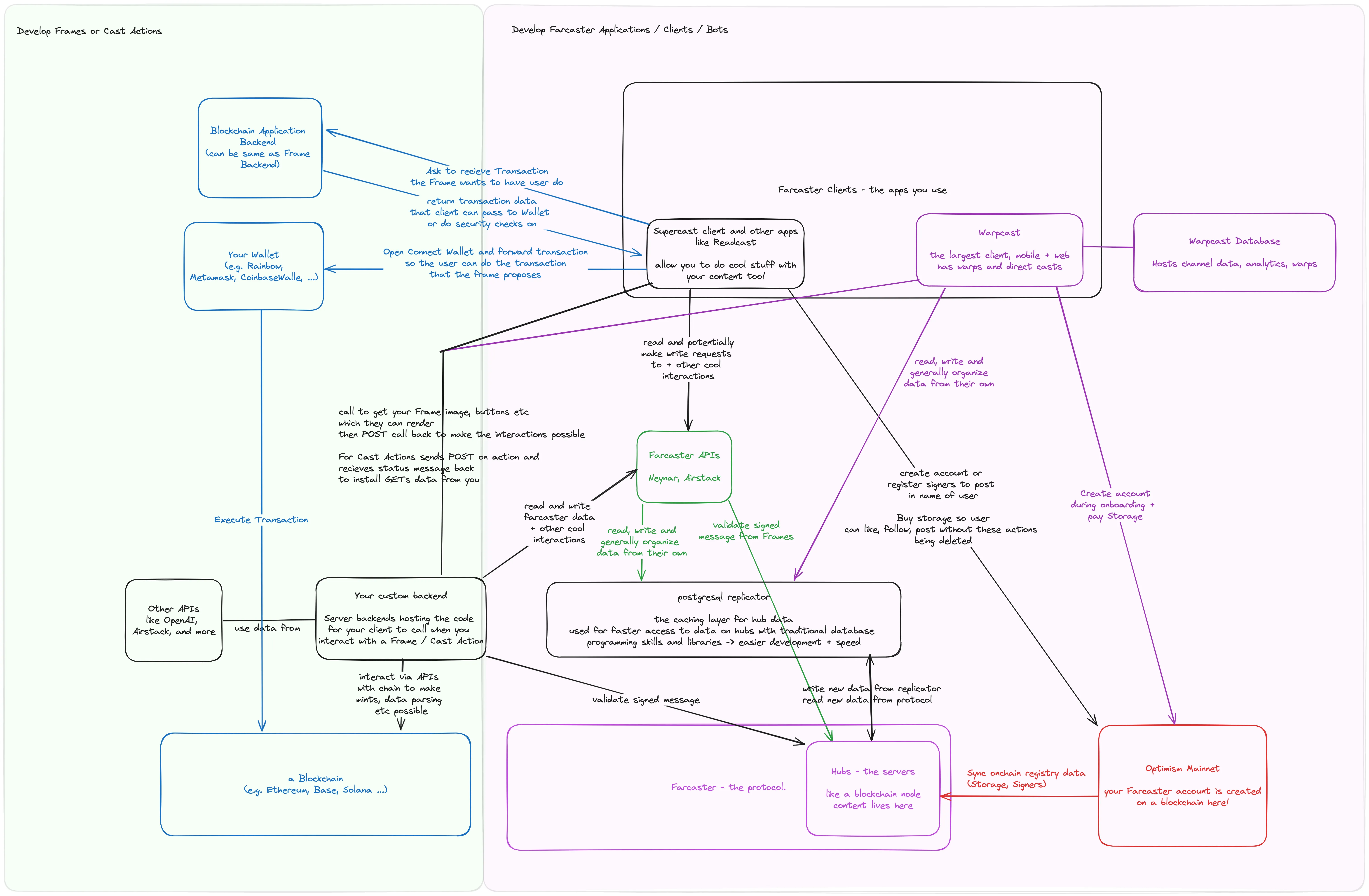
Your on-chain identity lives on OP Mainnet. This is your anchor. It proves you own your account, holds your storage, and secures your reputation through cryptographic signatures. It is immutable and portable, meaning your identity travels with you regardless of which app you use to log in.
The social graph itself—your casts, replies, and likes—does not live on the blockchain. That data is stored in a decentralized network of nodes called Hubs. These Hubs communicate with each other to share data, creating a replicated social graph that is faster and cheaper to read than querying the blockchain for every interaction.
Sync infrastructure is the mechanism that keeps these two layers in lockstep. When you cast a message, it is signed on-chain and then propagated through the Hub network. If the sync process fails or lags, your social graph becomes fragmented. For creators monetizing their audience, this fragmentation is dangerous. Inconsistent data leads to broken integrations, missed revenue opportunities, and a fractured community experience.
The reliability of this sync process is the backbone of the entire Farcaster ecosystem. It allows different applications to build on top of the same social graph without reinventing the wheel. When the sync works, the protocol is seamless. When it doesn't, the decentralization that makes Farcaster unique becomes a liability.
This separation of concerns is what makes Farcaster unique. By keeping identity on-chain and content in Hubs, the protocol balances security with speed. But it also places a heavy burden on the sync infrastructure to maintain data integrity across a distributed network. For anyone building on Farcaster, understanding this distinction isn't optional—it's the foundation of every technical decision you will make.
How delta graphs and hub sync work
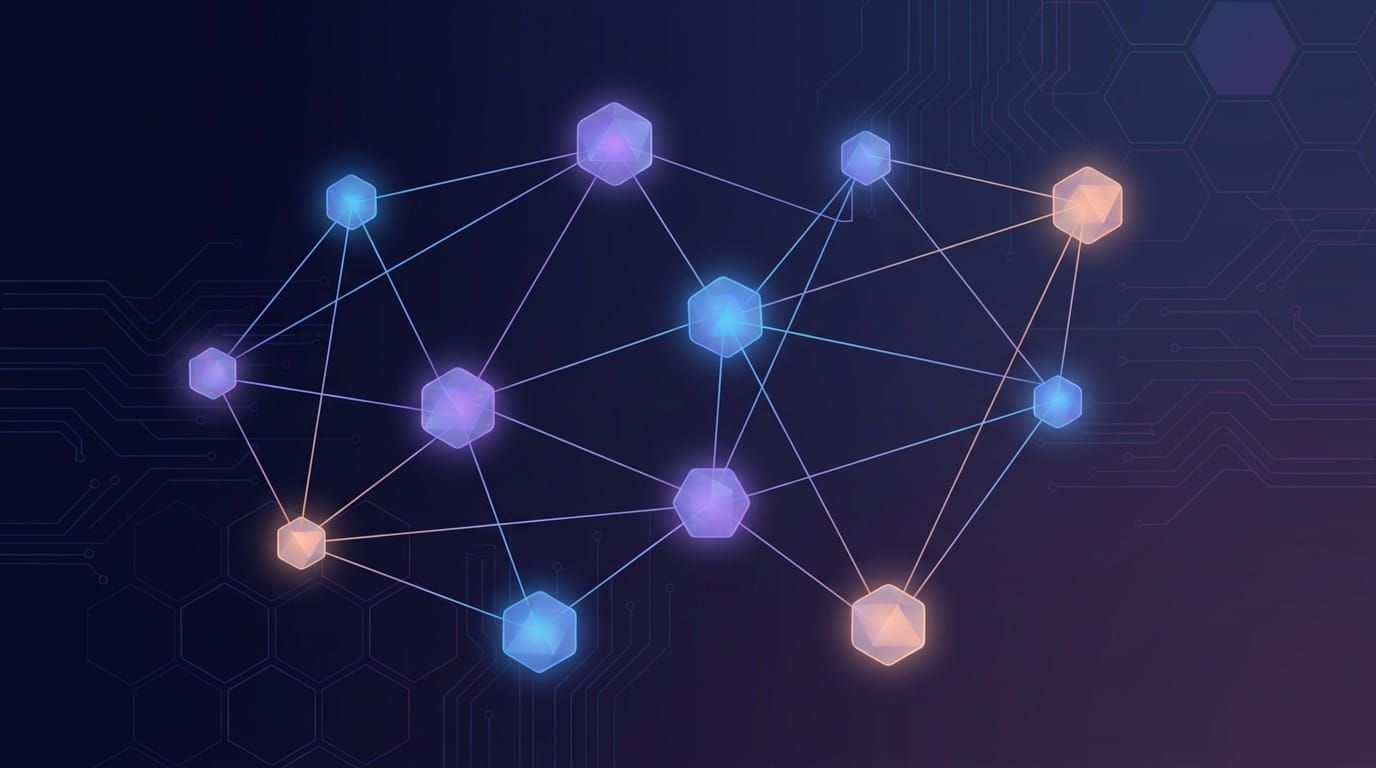
Farcaster does not rely on a single central server to store every message. Instead, it uses a network of independent nodes called hubs. These hubs communicate using a mechanism known as delta-based syncing. Think of it like a group chat where you only send the new messages, not the entire conversation history every time someone joins.
In a delta-based system, hubs compare their state against each other and only transfer the differences—the "deltas." When a user posts or updates their profile, that change is broadcast as a delta. Other hubs receive this small packet, verify its cryptographic signature, and add it to their local database. This approach drastically reduces bandwidth usage and allows the network to scale efficiently as the user base grows.
The gossip protocol drives this exchange. Hubs constantly share these deltas with their connected peers in a mesh-like fashion. If one hub misses a message, it can request the specific missing delta from another hub that has it. This decentralized verification ensures that no single point of failure can corrupt the network's state, while keeping sync times fast even during peak activity.
To see how this impacts network health and throughput, you can monitor live hub synchronization metrics.
Comparing Farcaster Hub Providers
When building for monetization, your hub is the backbone of your sync infrastructure. It dictates how quickly your content reaches users and how reliably your API calls return data. The Farcaster network relies on a decentralized hub model where providers synchronize messages with one another, but not all hubs are built equal for commercial use.
For creator monetization, you need low latency to ensure real-time interactions (like tipping or exclusive content drops) feel instant, and high uptime SLAs to keep your revenue streams active. API reliability is equally critical; if your provider rate-limits your requests during a high-traffic launch, you lose sales.
Below is a direct comparison of the leading infrastructure providers based on their public technical specifications and community benchmarks.
| Provider | Avg. Sync Latency | Uptime SLA | API Rate Limit | Key Features |
|---|---|---|---|---|
| Supercast | < 2s | 99.9% | 100 req/min | Built-in tipping, exclusive content hosting, creator analytics |
| Neynar | < 1s | 99.95% | Unlimited (Enterprise) | Comprehensive SDK, wallet integration, broad ecosystem support |
| Base Hub | 2-5s | 99.5% | 50 req/min | Base chain integration, lower cost, community-driven |
| Airstack | < 3s | 99.0% | 25 req/min | On-chain data indexing, social graph analysis |
Why Latency and SLAs Matter for Creators
Sync latency directly impacts user experience. If a user buys a subscription or tips a creator, that transaction must reflect across all hubs quickly. Delays can lead to duplicate transactions or frustrated users who think their payment failed. Supercast and Neynar lead in this category, with sub-second to sub-two-second sync times, making them ideal for real-time engagement.
Uptime SLAs are your insurance policy. A 99.9% SLA means roughly 43 minutes of downtime per month, while 99.95% drops that to 22 minutes. For a monetization-focused app, even 20 minutes of downtime can mean significant lost revenue. Neynar’s enterprise-grade SLAs offer the highest reliability, while Base Hub’s community-driven model offers a cost-effective alternative for smaller creators willing to accept slightly higher risk.
API Rate Limits and Scalability
API rate limits determine how many requests your application can make per minute. If you’re building a high-traffic platform, hitting these limits can break your app. Neynar’s unlimited enterprise limits provide the most flexibility for scaling, while Supercast’s 100 req/min is sufficient for most mid-sized creator projects. Base Hub and Airstack have stricter limits, which may require more sophisticated caching strategies for larger audiences.
Choose your hub based on your current scale and budget. For new creators, Supercast offers a balanced mix of speed and features. For established brands requiring maximum reliability and scale, Neynar’s enterprise offerings are the industry standard. Base Hub remains a strong option for those already embedded in the Base ecosystem who prioritize cost savings over absolute peak performance.
Why sync reliability drives creator monetization
Sync reliability is the hidden infrastructure behind every successful monetization model on Farcaster. Because Farcaster leverages Ethereum for the identity layer and a distributed gossip network between peers to store messages, the speed at which your content reaches the network directly impacts how quickly you can engage your audience.
When syncs are delayed or fail, the business consequences are immediate. A creator posting time-sensitive content—such as a drop announcement or a live reaction—loses value if their followers see it minutes late. In the creator economy, engagement is a function of velocity. Slow syncs mean lower interaction rates, which directly reduces the effectiveness of ad revenue and subscription retention.
Think of your sync infrastructure as the logistics network for a physical store. You can have the best products (content), but if the shelves are empty when customers arrive, sales don't happen. For creators, this means that investing in robust sync nodes isn't just a technical preference; it is a revenue strategy.
The cost of inaction is measurable. Users who experience laggy or inconsistent feeds are more likely to churn, especially in a permissionless environment where they can easily switch to alternative clients or networks. Ensuring your sync is fast and reliable keeps your audience engaged and your monetization streams active.
Choosing the right sync strategy for your app
Selecting a hub provider is less about finding the "best" service and more about matching infrastructure to your app's specific scale and technical constraints. Farcaster's decentralized nature means no single hub holds the full truth; instead, hubs synchronize by receiving messages from peers and broadcasting their own. This architecture introduces trade-offs in latency, consistency, and cost that your engineering team must navigate.
Your app's tolerance for stale data dictates your primary hub choice. If you are building a real-time chat or notification service, you need a hub with low replication lag. For archival or analytics purposes, a slightly delayed but highly consistent feed is acceptable. Prioritize hubs that publish their replication metrics transparently.
Don't rely on marketing claims. Run your own load tests against shortlisted hubs during peak hours. Measure the time delta between a message being posted and appearing in your app's feed. Consistent uptime is non-negotiable for creator monetization tools, as downtime directly impacts revenue and user trust.
Never rely on a single hub. Connect to at least two independent hubs and compare their data. If one hub misses a message or falls behind, your app can seamlessly failover to the other. This "dual-hub" approach is the standard for robust Farcaster applications, ensuring your service remains available even if one provider experiences an outage.
Technical support quality varies significantly. Look for providers that offer detailed SDKs, clear error codes, and responsive engineering channels. Good documentation reduces your integration time and helps your team troubleshoot sync issues without waiting for external support tickets.
By treating hub selection as a multi-variable optimization problem rather than a simple vendor choice, you build a foundation that scales with your user base. Focus on redundancy and verified performance metrics to protect your app's reliability.
Common questions about Farcaster sync
Syncing your Farcaster data requires understanding the protocol’s unique structure and costs. Below are the most frequent questions from creators and developers looking to monetize their presence on the network.
No comments yet. Be the first to share your thoughts!